Replacing a cracked or sunken driveway
When the old slab has broken up or dropped, the ground under it usually gave way first, so we tear it out and fix the base before any new concrete goes down.
Driveway cracked, sinking or holding water? We pour a new slab sized for what you park and timed so a freeze doesn't catch it.
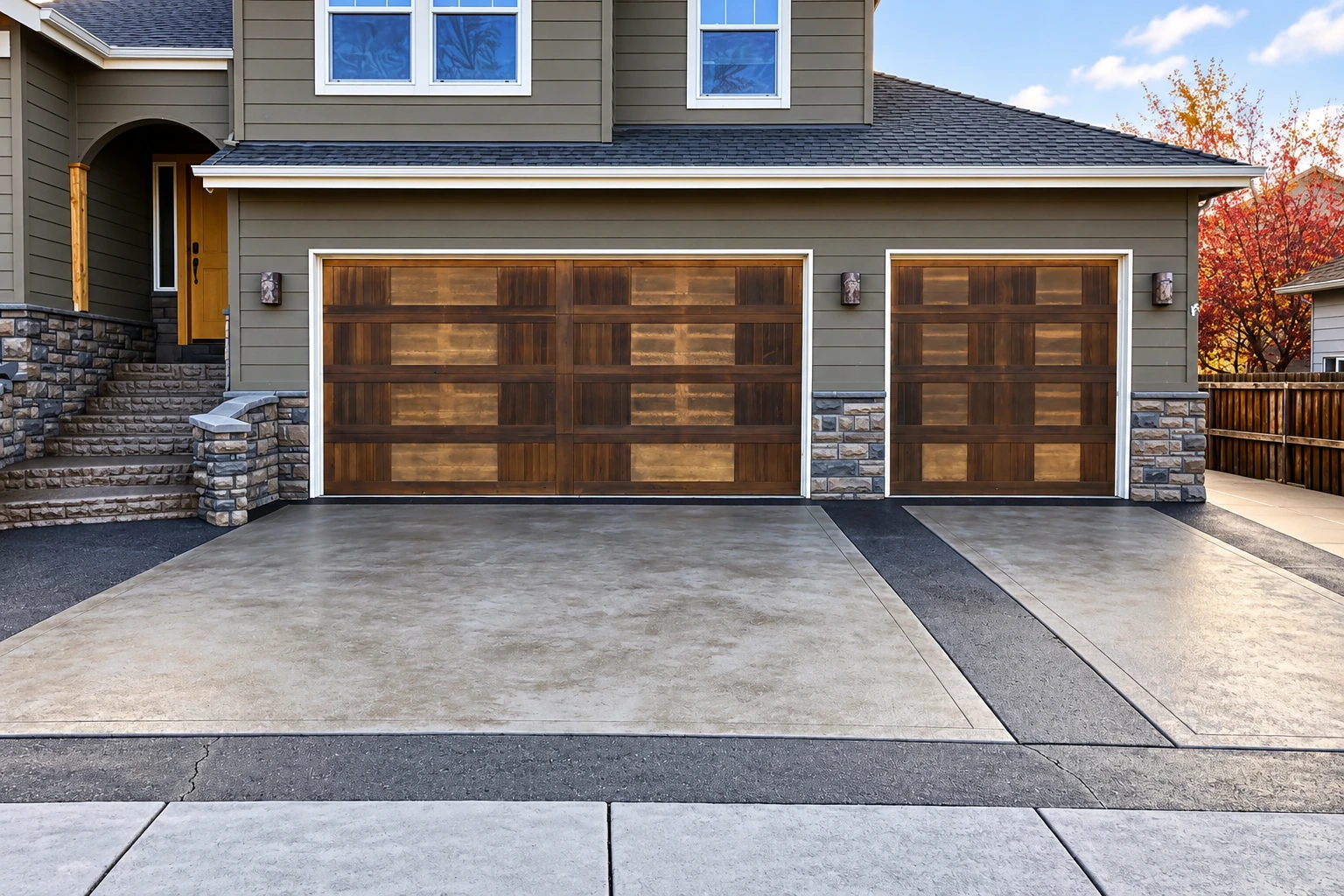
Concrete driveway building in Marshalltown is the work of clearing out the old surface, getting the ground under it right and pouring a new slab that gives your cars a solid, flat place to park. The concrete keeps gaining strength for about 28 days after the pour.
We're based in Marshalltown and build driveways in Newton, Grinnell, Nevada and other cities around it, and most calls start the same way, with a slab that's cracked, dropped or holding water by the garage. Your price mostly comes down to the size of the driveway, how thick it needs to be for what you park, whether there's old concrete to tear out and how much work the ground needs before we pour. The schedule turns on the weather, the city permit and inspection, and the wait while the new slab cures before you can park on it. We check what the city needs before we set a date and handle the paperwork, and your own figure comes from the estimate after I've seen the site.
I come out, look at your driveway and write the estimate, then lead the small crew that does the work, so the plan you hear is the plan we follow.
Before we start, you'll know the order of work, what to have ready and when you'll be without the driveway, because I spent years running schedules before I ran crews.
If a freeze is coming or the day's going to bake the slab, I'd rather move the pour and tell you today than hand you a driveway that flakes by spring.
It starts with what you park, so I ask. Four inches of concrete is standard for cars, and six inches, with more concrete and often rebar, the steel bars set inside to hold the slab together, is common under trucks and RVs. Then we tear out the old surface, dig down and pack the subgrade, the soil the slab sits on, because most Iowa soils make a fair-to-poor base and ground that's only raked level settles and takes the concrete with it. We check where the water runs and set the slab to fall away from the house and garage. Most driveway trouble starts with the wrong mix or a pour too close to a freeze, so we order an air-entrained mix, one with tiny air bubbles that give freezing water room to expand, and pick a date when a hard freeze right after is unlikely. We pour in the cooler part of the day, give it a broom finish, a light texture so tires and boots grip, and cut control joints on time, shallow grooves that give the slab a planned place to crack instead of across the middle. Then comes curing, the wait while it hardens before anyone uses it. If the budget gets tight, I'll cut a fancy finish before I cut the base, because you can change a surface later but not what's under it.
Plenty of people pair the driveway with a concrete patio out back, and we can line up both pours in one plan. If you want more than a plain broom finish where it shows, stamped concrete borders or a stamped apron add pattern and color without changing how the slab underneath is built.
When the old slab has broken up or dropped, the ground under it usually gave way first, so we tear it out and fix the base before any new concrete goes down.
A gravel drive that ruts every spring and tracks rock into the garage can become a concrete slab, and we check and pack what's there before we decide what stays.
A second car or a bigger garage often means adding an extension, and the city caps driveway width by garage size, so we plan it to fit your house.
If water pools by the garage or runs back at your foundation, we set the new slab to carry it toward the street or yard so it stops sitting where it does harm.
Send the form and we'll reply within one business day to set a time. I'll come out, look at your driveway and write up your free estimate, with no pressure and no obligation.
Your garage stall count sets how wide the city lets the driveway be, so knowing it up front means the plan fits the permit from the first visit.
Tell us about every car, truck or RV that'll sit on the slab, because heavier loads call for a thicker slab and change how much concrete we order.
Point out spots where water pools or ice builds up now, since those tell us how the ground drains and which way the new slab needs to fall.
Broom finishes, stamped borders, wide aprons and patio connections, shown here as examples to talk through when we plan your driveway.
Straight answers on price, permits, width and timing for a new concrete driveway in Marshalltown, from the questions we hear most.
Across the US, installing a concrete driveway usually costs about $10 to $11.50 per square foot. That's a national figure, and the estimate I write after seeing your site turns it into a number for your driveway. We're insured for the work, and our promise is the same on every driveway. Satisfaction guaranteed on every job.
Yes. In Marshalltown you need a written permit from the City Engineer to build, alter, repair or relocate a driveway, curb cut or driveway extension, and the driveway permit application goes to the Housing & Community Development Department. The city also inspects before the concrete goes in, with time to fix anything first. We handle the paperwork and set your pour date around that inspection.
With no garage or a one-stall garage, Marshalltown allows a 12-foot driveway plus one extension, and with two or more stalls it allows 24 feet plus one extension. An extension can be 10 feet, one vehicle wide. Near the street, inside the city right-of-way, the driveway needs at least 6 inches of full-depth concrete unless the City Engineer approves otherwise.
You can usually walk on new concrete within a day or two and drive on it after about a week. Plan somewhere else to park for that week, and go by what we tell you about your own slab, since it's still gaining strength well after you start using it.
No, the usual guidance is to skip deicing chemicals during the first winter and use them in moderate amounts after that. You can also consider sealing the surface with a commercial breathable sealer, and we're glad to talk through whether it makes sense for your driveway.
Yes. Iowa requires contractors who earn at least $2,000 a year from construction to register with the Iowa Department of Inspections, Appeals, and Licensing. Homeowners doing work only on their own property don't have to register. We're fully licensed, and you're welcome to ask us anything you want to check before you hire anyone.
Call (641) 354-2469 or use the form early, since the permit, the inspection and the weather all have to line up before we pour.