Backyard patios
This is the most common spot for a pattern. A patio sits in full sun and snow all year, so it's where the choice between a color-rich sealer and winter protection matters most.
Want more than plain gray for your patio or walk? We pour, stamp and seal it, then help you plan the first winter and reseals.
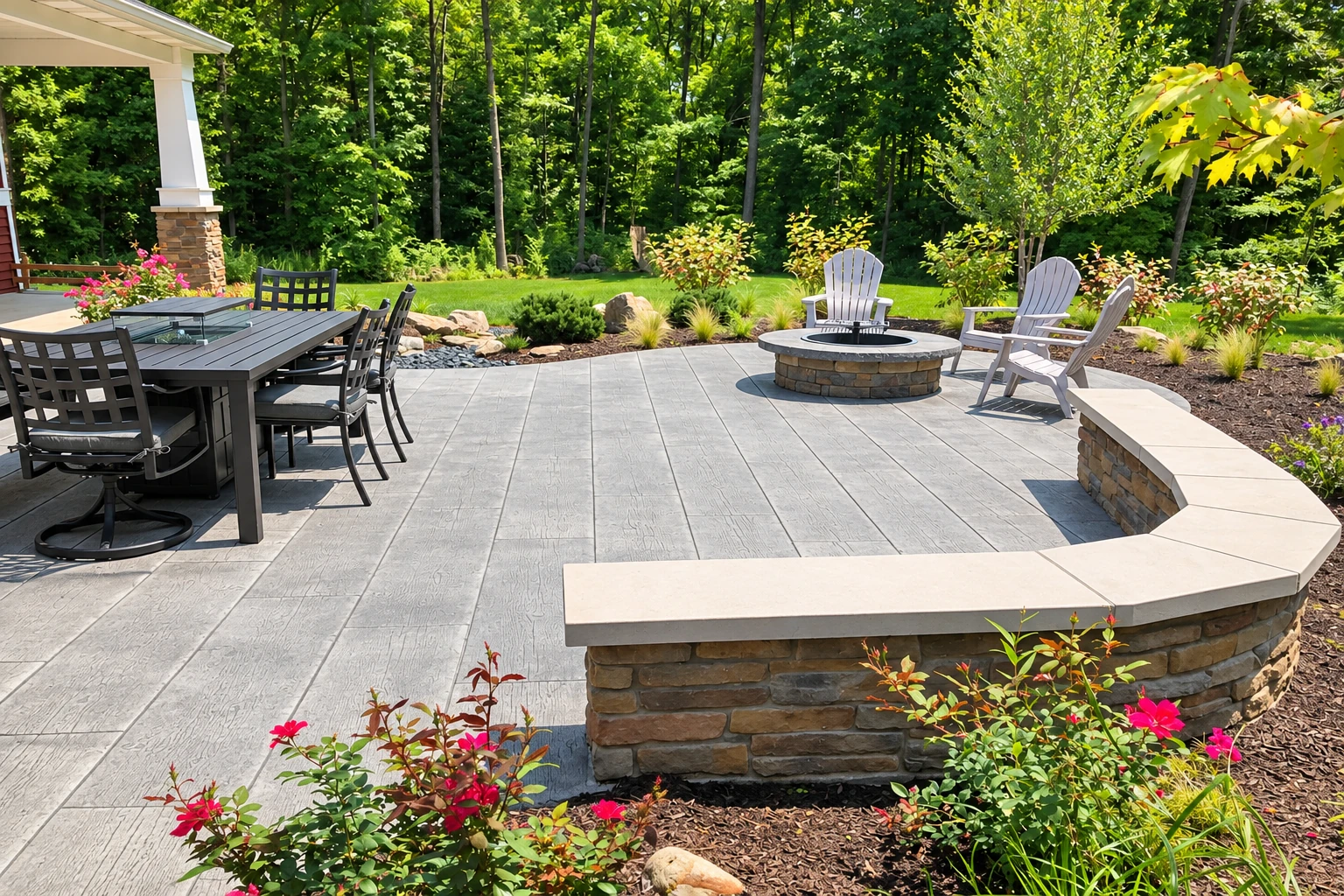
Stamped concrete is a regular slab whose wet surface we press with stamping tools, so a patio, walk or landing in Marshalltown comes out looking like stone, brick or slate instead of plain gray. The pattern goes in the same day as the pour, while the surface is still soft.
Most people call us because they want an outdoor slab that looks finished, or because they're weighing stamped work against pavers. What moves the price is the size and shape of the area, the pattern and how many colors you pick, how much old concrete has to come out first, and which sealer you choose. The schedule turns on the weather, since stamping needs a dry day without hard heat, and on any city permit the job needs. I come out, look at the spot and write up the estimate, so you get a figure for your own yard.
I come out, look at the job and write the estimate myself, then lead the small crew that does the work, so the person who planned your slab is there for the pour.
Concrete doesn't forgive a step done late, so we run the job in order. I'd rather move a pour than rush it, and I'll tell you that early instead of surprising you later.
We're fully licensed and insured. Iowa's licensing department registers contractors who earn at least $2,000 a year from construction work, while people working only on their own property don't have to register.
With stamped work, the sealer matters as much as the pattern, so I talk through the trade between color and winter protection with you before we pour. On the job, we dig out to firm ground and pack the subgrade, the soil the slab sits on, because a base that's only raked level settles and takes the pattern with it. We set the forms so the slab falls away from your house, add rebar where the job calls for it so the steel holds the slab together, and pour early in the day, since midday heat leaves a weak, dusty top. While the surface is still soft, a colored release powder can go on so the stamps lift clean and the low spots pick up deeper color, and then we press the pattern. We cut control joints next, lines that give the slab a place to crack where we chose, and let it cure, a wait while it gains strength, before the sealer goes on. If the budget's tight, keep the base and simplify the pattern, because nobody sees the base on day one but it decides whether your pattern stays flat.
Stamped work usually meets plain concrete somewhere. A stamped path often ends at a public walk, and our concrete sidewalk building covers the plain, city-standard part. If the garage needs work too, garage floor concrete gets a smooth, hard finish instead of a pattern, and we can plan both pours in one order of work.
This is the most common spot for a pattern. A patio sits in full sun and snow all year, so it's where the choice between a color-rich sealer and winter protection matters most.
A stamped path from the driveway to the door looks good every day. The public walk along the street follows separate city rules, which we cover in the questions below.
A stamped landing can match the patio or path it leads to. We keep the texture on treads easy to sweep and shovel, because steps take the most foot traffic and snow.
A stamped band around a broom-finished slab gives a decorative look with less stamped area. That usually costs less and leaves you a smaller surface to reseal later.
Send the form and we'll reply within one business day to set a time. I come out, look at the spot and write up a free estimate, with no obligation to go ahead.
A rough length and width, or a phone photo with a tape measure in it, lets me come to the visit ready to talk pattern, color and sealer for your space.
Back patio, front path or steps by the door. Where it sits tells me about drainage, room for the truck and how much sun and snow the sealer will face.
Work that touches a public sidewalk follows city rules, and a drive off a county road needs a county permit, so knowing early keeps the schedule honest.
Patterns, colors and border layouts to look through before your estimate, so we can talk about what fits your yard and your budget.
Straight answers on sealers, resealing, winter salt and the city rules that come up most on stamped jobs around Marshalltown.
It's a trade between color and winter protection. Film-forming sealers are the most common on stamped concrete because they bring out the color. Where a slab faces freeze-thaw cycles and deicers, one sealer maker prefers penetrating sealers for long-term durability, and says they typically protect for 5 to 10 years when properly applied. We'll go over which fits your slab.
Reseal when the surface shows it, not on a set number of years. The usual signs are water no longer beading up, stains soaking in, or the color going flat. Resealing is the most common upkeep stamped concrete needs, and we help you plan for the first one when we finish the job.
Skip deicing salt the first winter. One concrete products maker says deicers speed up scaling and surface damage on new concrete, and points to sand for traction that season, since it grips without hurting the surface. You can also ask whether your mix includes an air-entraining additive, which leaves tiny air pockets that relieve pressure when water freezes.
Yes. The City of Marshalltown requires a permit to remove, rebuild or install a sidewalk, with a written agreement to follow city rules. Its standards call for standard gray cement and a broom finish, a brushed texture for grip, and any other color needs the City Engineer's approval. We check what the city needs and handle the paperwork before we set a date.
We check with the city before we set a date, and if a permit or inspection is part of it, we handle the paperwork and schedule around it. The city's Building Division issues building permits for work like alterations, additions and new construction. A driveway coming off a county road needs a permit on file with the county engineer's office, and we work on county roads around Marshalltown, Newton, Grinnell and Nevada.
Call (641) 354-2469 or send the form early, so there's time to sort out any permit before we set your pour date.