Patios that look tired
A patio that's solid but faded or patched is the most common call, and techniques can be combined, like a stained field with a border, so one surface carries more than one look.
Gray slab looking tired, patched or stained? We look hard at it first, then help you pick a color and finish that suits it.
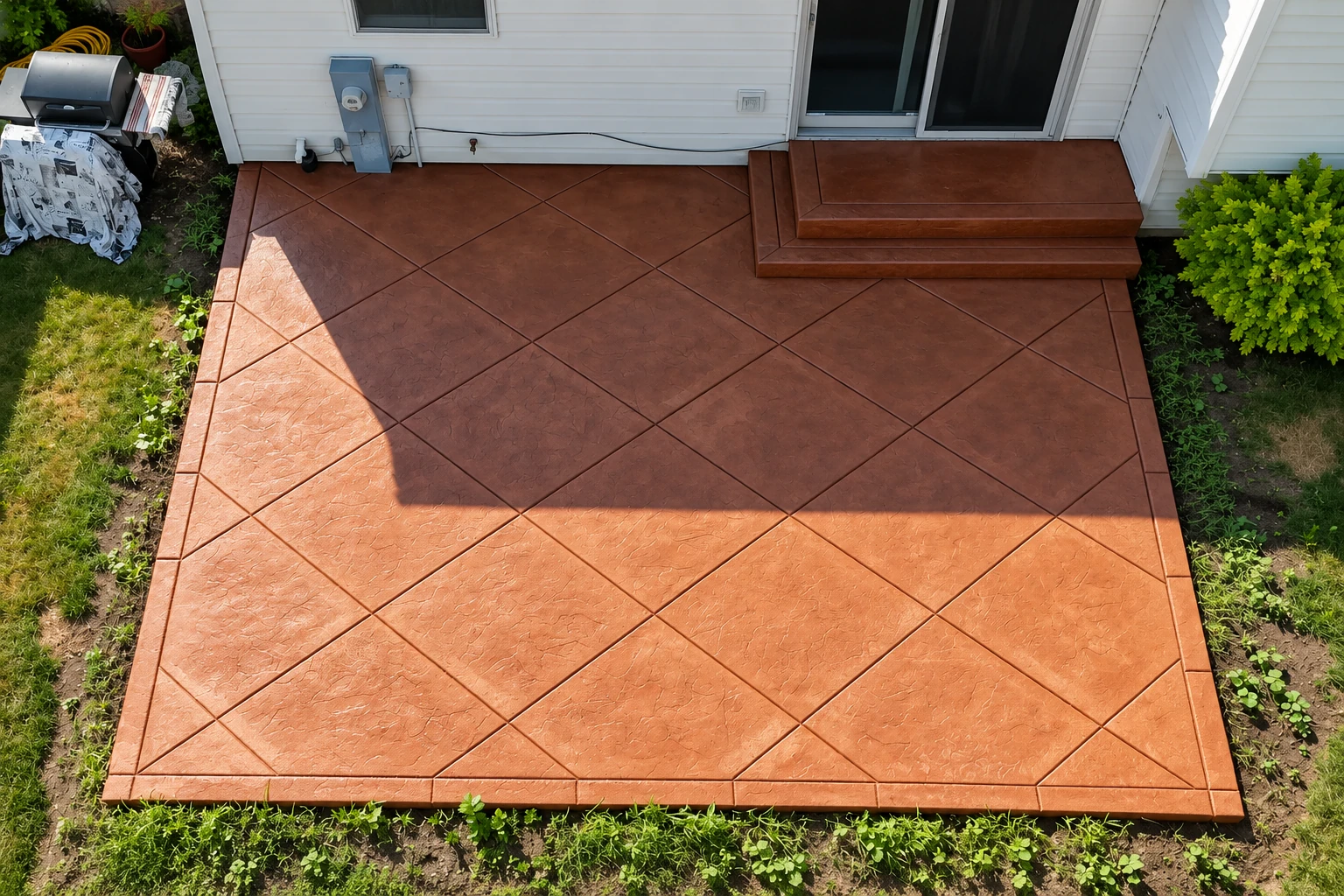
Decorative concrete gives a plain slab color, texture or a pattern. It's done with a stain, with an overlay, which is a thin new layer over the old concrete, or with a finish worked into a new pour. Marshalltown Concrete does this work in Marshalltown, Newton, Grinnell, Nevada and other cities around it.
Most calls start with a patio, walk or floor that still works fine but looks worn, stained or patched. The price turns mostly on that old slab, because a worn or cracked one needs repair or tear-out before any finish goes on, and then on its size, the method you pick and how many colors or patterns you combine. The schedule depends on that repair work, the weather and, near the street, city inspection, and your own figure comes from the estimate I write up after I've seen the slab. Iowa requires every contractor to register with the state before doing construction work, and we're fully licensed and insured.
I come out myself, look at your slab and write the estimate, and the small crew I lead does the work, so what we talked about is what gets built.
You get the order of work up front, from repair to color to sealer, because concrete doesn't forgive a step done late, and you'll know what to have ready.
If the weather's wrong for a pour or a stain, I'll move the date and tell you that day, because rushing into bad conditions shows in the finish for years.
We start every decorative job with a hard look at the slab you have, because whatever's wrong with it will show through a stain or crack through an overlay, and if it needs work first, I tell you before you pick a look. Then we fix or replace what needs it, check where the water runs so nothing falls toward the house, and clean the surface so the color takes evenly. On a new pour we dig out and pack the subgrade, which is what the slab sits on, instead of raking it level. We pour early rather than in midday heat that leaves a weak, dusty top, and we cut control joints, shallow grooves that give cracks a planned place to go. Once the concrete has cured, which is the wait while it gains strength, we stain or seal it. If the budget's tight, spend it on the base and keep the finish simpler, because nobody sees the base on day one, but everyone sees the crack a bad one causes.
Decorative work often ties into the rest of the yard. A colored or textured face on concrete retaining walls can match the patio beside them, and when you're building new, concrete floor installation lets us plan the color and finish while the floor goes down.
A patio that's solid but faded or patched is the most common call, and techniques can be combined, like a stained field with a border, so one surface carries more than one look.
A sound interior floor can take a stain or overlay instead of carpet or tile, which suits basements and shops where you want a hard surface that's easy to sweep and mop.
Steps and entries see wet feet, and sealed stamped concrete can be slippery when wet unless the contractor adds grit, so ask about it before work starts. We'll bring it up either way.
Marshalltown's public sidewalks have to be standard gray with a broom finish, a brushed texture for grip, and other colors need the City Engineer's approval. We keep decorative work off that strip unless it's approved.
Send the form and we'll reply within one business day to set a time. I'll come out, look at the slab and write up a free estimate on site, with no obligation.
Send a few photos of the slab as it is, cracks and all, so I can see before the visit whether it's ready for a finish or needs work first.
Tell us whether it's in the yard or by the street, because work along the street follows city rules on color, finish and inspection that the yard doesn't.
Describe the color or pattern you want, or send a picture you like, so the estimate covers the right method for your slab instead of a guess.
Stained, stamped and overlaid surfaces, borders and color blends, shown as examples of finishes and layouts we can talk through at your estimate.
Straight answers on stain, overlays, sealing, cold weather and city rules, so you can plan around the slab you already have.
No, stain makes them easier to see. Stain is see-through, so every crack, patch and trowel mark in the old slab shows through the color. A badly worn slab needs an overlay before any stain goes on, so plan for that extra step, and I'll tell you at the estimate whether yours does.
Usually not. As a rule of thumb, an overlay cracks right along with a slab that has active structural cracks or heaving, where sections lift. You either fix the slab underneath first or budget to tear it out and pour new, and that choice comes before you pick a finish.
About every 2 to 3 years, according to one flooring company's guide, to keep its color. Plan on it as a repeat job, the way you'd plan on restaining a deck, and count that upkeep when you weigh stamped work against a plain or stained finish.
It can, but cold changes the plan. Concrete gains strength more slowly as temperatures fall, and fresh concrete that freezes before it's strong enough loses long-term durability. Ask how your pour will be kept from freezing until it gains strength, and ask about entrained air, tiny bubbles spread through the mix that can relieve pressure as the concrete freezes.
The city's sidewalk guide says no written permit is required, but the Engineering Division must inspect all sidewalk work in the public right-of-way along the street, including the forms before the pour. Only people the city authorizes, with insurance and bond, can do that work. Check current rules with that office, and we'll confirm what the city needs before we set a date.
Call (641) 354-2469 seven days a week or use the form, since booking early gives your job a better shot at good weather.