Forms get checked before the pour
The city's Engineering Division inspects all sidewalk work in the public right-of-way, the strip along the street, and checks the forms before any concrete goes in. We set our pour date after that inspection.
Walk cracked, uneven or sinking? We tear it out and build a new concrete sidewalk on a packed base, poured in the right order.
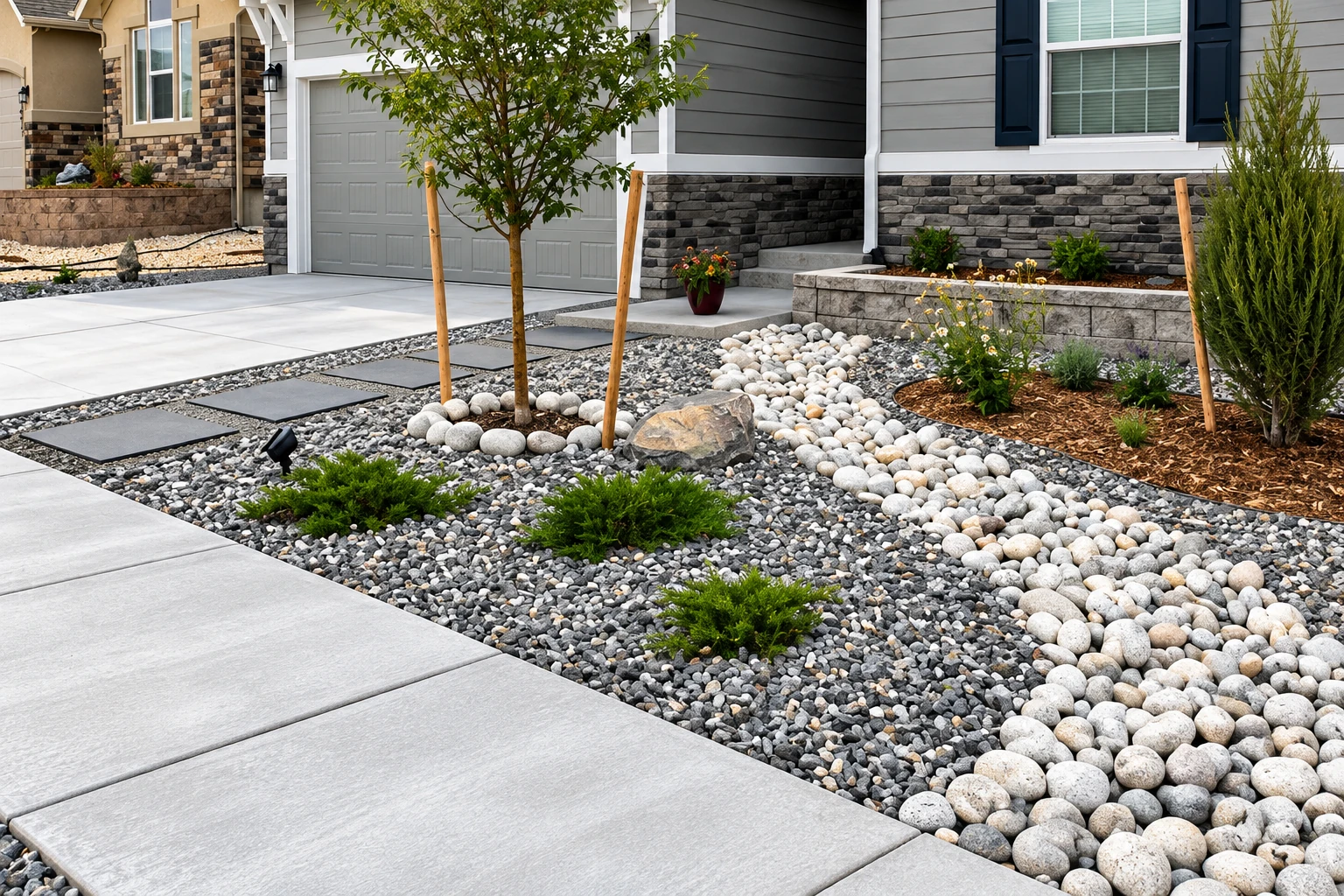
Concrete sidewalk building in Marshalltown, IA starts with digging out the path and packing a firm base. Then we set forms and pour a walk that sheds water away from your house and gives you a solid path to the door or the street.
Most calls start with a walk that's cracked, sinking or tipped so water pools on it, or with a new house that needs a walk out to the street. The price moves with the length and width, whether an old walk has to come out, how much digging and base the ground needs, and the finish you pick. The schedule turns on the weather, any city check before the pour and the curing time before you use it. I come out, walk the route and write up your number.
A walk stays flat only if its base stays put, so we dig out and pack it rather than rake dirt level. It's hidden on day one, and it's the last thing I'd cut.
I spent years running a construction schedule, so you get the order of the work up front. If weather or the city's check moves the pour, I'd rather tell you that day than rush it.
The state has contractors register before doing construction work in Iowa. We're fully licensed and insured, and I write your estimate myself and lead the small crew that pours your walk.
We start by marking the route and checking where your water runs, so the walk falls away from the house instead of toward it. Then we dig out to firm ground, pack the subgrade, which is the soil the walk sits on, and build a solid base over it before we set the forms. If the walk runs along a city street, we line up whatever the city needs to see before the pour and set our date around it. We pour in the cooler part of the day, because midday heat can leave a weak, dusty top, and we give it a broom finish, light grooves that keep shoes from slipping when it's wet. We cut control joints, shallow grooves that give the concrete a straight place to crack, while the slab is still young so cracks don't pick their own spot. When we're done, we tell you how to treat the new walk through its first winter.
A walk usually ties into something else. If it runs to a garage with a floor that's cracked or sinking, our garage floor concrete work can go on the same schedule. If you'd like color or a border instead of a plain broom finish, look at decorative concrete before we price the walk.
The city's Engineering Division inspects all sidewalk work in the public right-of-way, the strip along the street, and checks the forms before any concrete goes in. We set our pour date after that inspection.
Along a city street, only people the city has authorized, with insurance and a bond in place, may do concrete work. Ask anyone you're pricing whether they're set up for that before you sign.
City code makes the owner of the lot beside a walk on a city street keep it free of cracks, holes and uneven spots. A walk left in disrepair counts as a public nuisance.
Send the form and we'll reply within one business day to set a visit. I'll come out, look at the route and write up a free estimate on site, with no pressure and no obligation.
Tell us whether an old walk has to come out or it's new ground, because tear-out and base work change both the price and the order of the work.
Point out spots where water pools or runs toward the house, because the new walk has to shed it the right way, and I check that before anything is dug.
If a move-in date is waiting on the walk, tell me, because the cure has to fit in before anyone uses it, and I'll plan backward from there.
Use these examples to talk through broom finishes, edges, widths and decorative options before we write up your estimate.
Straight answers to what Marshalltown homeowners ask most about cost, city rules, the cure and the first winter on a new walk.
Installing a concrete sidewalk across the US usually costs about $12 to $14.50 per square foot. That's a national figure for an installed walk, not our price. Your own number comes from the free estimate, after I've looked at the route, any old walk that has to come out and the ground underneath.
On lots first mapped out before January 1, 2001, the city requires a public sidewalk once a new building is finished on a vacant lot. The same rule applies to work that adds 50% or more in value, or rebuilding after 50% or more damage, and the owner pays all costs. You can read the city's rule for the exact wording.
Plan on 7 days before the walk carries regular traffic. Guidance from the Michigan Concrete Association says a new walk can open after 7 days of curing, the time concrete spends gaining strength, or sooner when testing confirms it's strong enough. We'll tell you when yours is ready.
No, skip deicing salt that first winter. One concrete maker's guide says salts like sodium chloride, the usual rock salt, or calcium chloride speed up scaling, the flaking of the top surface. Sand gives you grip without hurting the walk, so keep a bag of it by the door.
It can be. The same Michigan concrete group recommends thicker concrete where delivery vehicles will cross a walk. If trucks will roll over yours, say so when I come out to price it, so the estimate is written for that.
We pick up evenings and weekends, so call (641) 354-2469 or use the form with your address and whether it runs along a city street.