
Check the flood map first
The city's floodplain rules apply only to homes inside a special flood hazard district. The state flood map site points you to the FEMA Map Service Center or local officials for your current map.
Cracks in the walls, floors that slope, a corner that's dropped? We attach supports to your foundation to stop the sinking or lift it back.
Foundation raising in Marshalltown means attaching supports to your house's existing foundation, either to stop it from settling any further or to lift it back close to where it started. One maker's guide describes doing it with helical piles, a type of support that can do either job.
Most people call when a crack keeps getting longer, a floor starts to slope or one corner of the house sits lower than the rest, which usually means part of the foundation has moved. The price moves with how much of the house needs support and whether we're lifting it or just holding it where it is. The schedule turns on permits, and if you're in a flood district, on the city's flood review and sometimes the state's. I come out, look at what's settled and write the estimate for your house, so you have your own figure instead of a guess.
I come out to look at the house and write the estimate myself, and a small crew I lead does the work, so the person who measured it is there when it moves.
We're fully licensed and insured. We check what the city needs before we set a date, and when a permit or inspection is part of the job, we handle the paperwork and plan around it.
I ran schedules for a busy construction company before doing the work myself, so your job runs in the right order. If a date has to move, I'll tell you early. Satisfaction guaranteed on every job.
First we work out with you whether the goal is lifting the house or just stopping it from sinking more, because that choice decides how much support goes in and how far we take it. If your home sits in a flood district, I bring that up in the same talk, since the city's flood rules can shape the height and add permits before anything else happens. Then I walk the house, note where it has dropped and cracked, and write up the plan. Once any permits are in hand, our crew attaches the supports to the existing foundation, holds the house or brings it up, and cleans up before we leave.
When a slab or walk is in the way of a support, concrete cutting gives us a clean opening to work through, and we patch it when we're done. If your driveway went down with the house, it often makes sense to replace it once the foundation is steady, and our page on concrete driveway building explains how we build one on a dug-out, packed base.
The city's floodplain rules apply only to homes inside a special flood hazard district. The state flood map site points you to the FEMA Map Service Center or local officials for your current map.
Marshalltown requires a floodplain development permit to build structures and improvements inside that district, so if your house is in it, we plan for that permit before the crew gets a date.
The state's Department of Natural Resources says federal, state and local permits are needed before building in the flood plain or near a river or stream, except certain projects on very small streams.
After floodplain work, you submit a certificate from an Iowa registered engineer or land surveyor showing the floor heights comply, and the city wants it before the house is used or lived in.
Send the form and we'll reply within one business day to set a time. I come out, look at the settling and write up the estimate, free and with no obligation.
Jot down the cracks, sloping floors or dropped corners you've noticed and roughly when they showed up, so I know where to look first when I walk the house.
Let us know if your home sits in a flood district, or if you're not sure, because that changes the permits, the height and the schedule from the start.
We're based in Marshalltown and work in Newton, Grinnell, Nevada and other cities around it, so a house a short drive away is one we can come and look at.
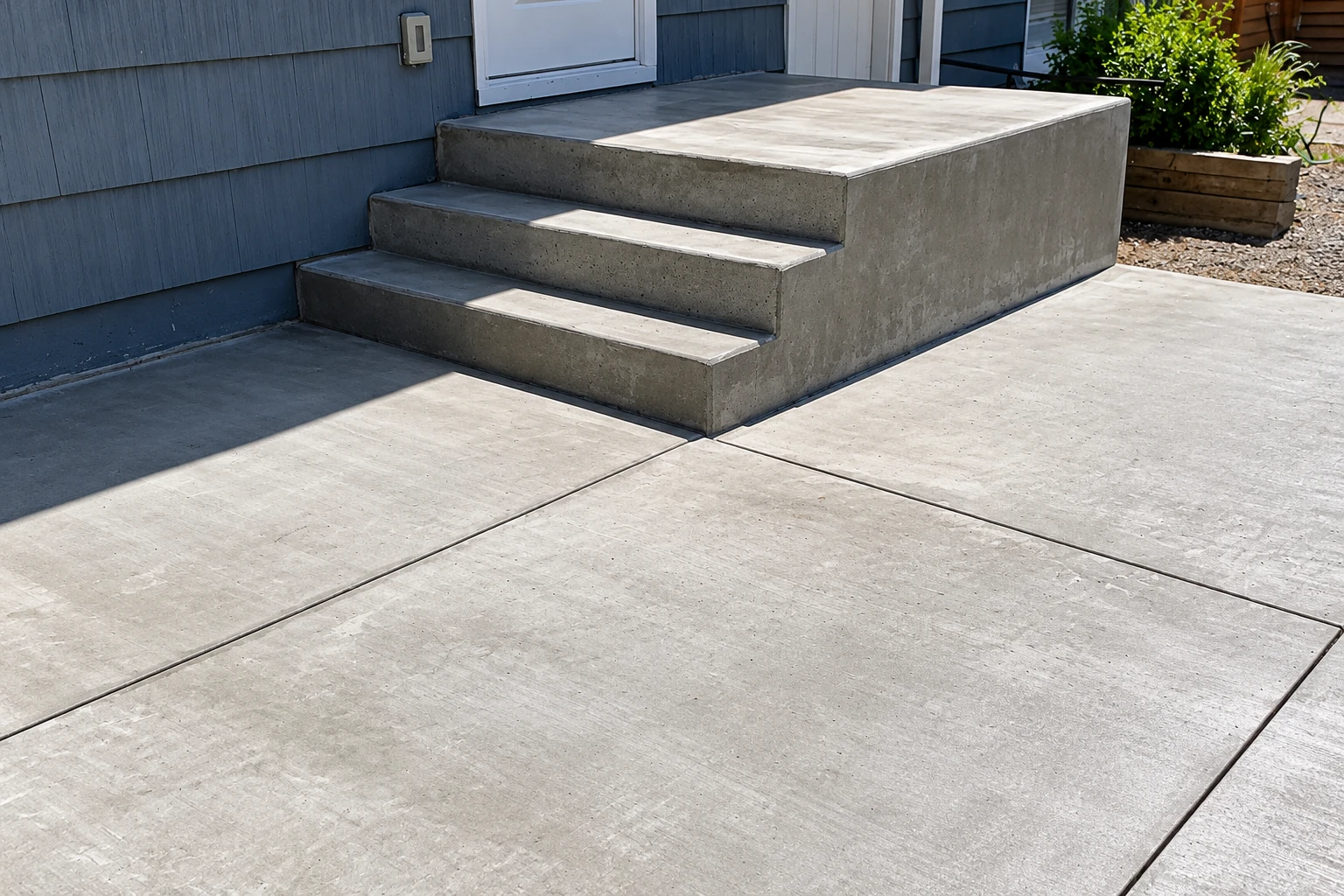
These photos show foundation walls, slabs, driveways and cut openings, the kinds of finishes and layouts worth talking over when we look at your house.
Straight answers to what Marshalltown homeowners ask about raising a settling house, from permits and flood rules to staying home during the work.
It's worth a look when your house shows uneven settling, cracking, heaving or a foundation that's failing in general, because one maker's guide names those as the problems its helical piles are meant to supplement or replace. Cracks that keep growing and floors that keep tilting are usually the first signs people notice. I'll come out and tell you what I see.
In most cases, yes. One maker's guide says its helical piles go in with portable equipment, even in tight indoor spaces, with no vibration and no heavy machines near the foundation, so the house can keep running with little hassle for the people inside. In a flood district, the engineer sign-off covered above can change that, so we sort it out before the date.
Check with the city before work starts, because Marshalltown requires a building permit before any building is altered or moved, and its permit list names alterations, additions and new construction without naming foundation raising. The city's Building Division takes applications in person, by mail or by email. When a permit is part of your job, we handle it.
For a new or substantially improved home, the city's floodplain permit says the lowest floor, basement included, sits at least 1 foot above the base flood elevation, the level the 100-year flood is expected to reach. You can request that number through the state's PERMT tool, and it's worth having before we settle on a lift height.
Up to 3 months right now for a response on the application, according to the state's natural resources department. That wait only matters if your project needs a state permit. When it does, we build it into the schedule instead of picking a date that can't hold.
Call (641) 354-2469 or email support@marshalltownconcrete.com, and tell me which cracks you've been watching, since how fast they grew tells me a lot.